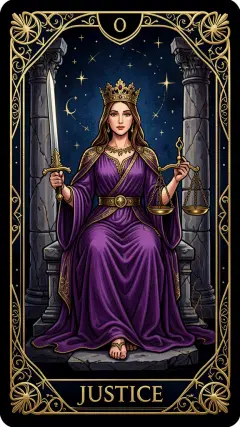
Free · no sign-up
Yes or no tarot
Word a question that can be answered “yes” or “no” and draw one card. The answer depends on the card’s meaning, and the explanation shows what it advises you to weigh.
Your card
Why this answer
Full reading in TelegramOne question, one draw: if you keep asking the same thing again and again, the answer simply becomes random.
How the answer is determined
Each of the 78 cards in the deck corresponds to one of three answers: “yes,” “no” or “maybe.” It follows from the card’s traditional meaning: the Sun, the Star or the Ace of Cups support “yes,” the Tower or the Ten of Swords say “no,” and cards of hesitation and uncertainty suggest “maybe” and refining the question.
In our deck, 48 cards answer “yes,” 19 answer “no” and 11 answer “maybe.” That’s why “yes” comes up more often: it is a feature of traditional interpretations, not a forecast for you.
How to word the question
- Ask a question that can be answered with “yes” or “no”: “Should I…?” rather than “What will happen if…?”
- Ask about your own actions and choices, not other people’s intentions: “Should I be the one to write first?” works better than “Do they love me?”
- Don’t ask about diagnoses, medications, legal matters or large sums of money: for such decisions, turn to a doctor, a lawyer or a financial advisor.
- Draw one card per question and listen not only to the answer but to the explanation: it shows what to pay attention to.
Which cards answer “yes,” “no” and “maybe”
All 78 cards of the deck by their answer. Select a card to read its full meaning.
Yes · 48
- The Fool
- The Magician
- The Empress
- The Emperor
- The Hierophant
- The Lovers
- The Chariot
- Strength
- Wheel of Fortune
- Temperance
- The Star
- The Sun
- Judgement
- The World
- Ace of Wands
- Three of Wands
- Four of Wands
- Six of Wands
- Seven of Wands
- Eight of Wands
- Page of Wands
- Knight of Wands
- Queen of Wands
- King of Wands
- Ace of Cups
- Two of Cups
- Three of Cups
- Six of Cups
- Nine of Cups
- Ten of Cups
- Page of Cups
- Knight of Cups
- Queen of Cups
- King of Cups
- Ace of Swords
- Six of Swords
- Knight of Swords
- King of Swords
- Ace of Pentacles
- Three of Pentacles
- Six of Pentacles
- Eight of Pentacles
- Nine of Pentacles
- Ten of Pentacles
- Page of Pentacles
- Knight of Pentacles
- Queen of Pentacles
- King of Pentacles
No · 19
- Death
- The Devil
- The Tower
- The Moon
- Five of Wands
- Ten of Wands
- Four of Cups
- Five of Cups
- Seven of Cups
- Eight of Cups
- Two of Swords
- Three of Swords
- Five of Swords
- Seven of Swords
- Eight of Swords
- Nine of Swords
- Ten of Swords
- Four of Pentacles
- Five of Pentacles
Maybe · 11
Frequently asked questions
Can I trust a tarot yes or no answer?
Treat it as a prompt for reflection, not as a decision made for you. The card shows one point of view, and you are the one who decides.
What does the answer “maybe” mean?
The card doesn’t give a clear answer: the situation hasn’t taken shape yet, data is missing or important circumstances depend on you. Refine the question or give it time.
Why does “yes” come up more often than “no”?
In classical interpretations most cards support moving forward, so the deck has more “yes” answers. That is a rule of the deck, not a promise of success.
What should I do if I don’t like the answer?
Notice your own reaction: disappointment or relief often shows what you really want. The decision stays with you.