A 7-card spread
Horseshoe tarot spread
A classic seven-card spread in the shape of a horseshoe: from the past and the present to hidden influences, obstacles, advice and the direction of development.
- 7 cards
- 120 crystals
- your first full spread in the bot is free
What this spread is
The Horseshoe sits between the three-card spread and the Celtic Cross: it is neither too short nor too heavy. The seven cards are laid in an arc from left to right, and they are easy to read as a small story: where it all began, where you are now, what works unnoticed, what gets in the way, who or what is nearby, what is worth doing and where it all may be heading.
The Horseshoe is a good fit when a question already has the shape of a story but isn’t complex enough to call for ten cards. It gives both a clear picture of the situation and a practical action, so it works well when you want not only to understand but also to decide what to do next.
What each position means
- Past. What led to the present situation: events, decisions, habits. Start here to see the roots.
- Present. Where you are now: the main state of affairs and your attitude to it.
- Hidden influences. What is quietly at work: inner motives, unspoken expectations, a backdrop you are not always aware of.
- Obstacles. What really gets in the way of moving: a doubt, a lack of resources, a circumstance. Sometimes the card shows that the obstacle is smaller than it seems.
- Surroundings. The circumstances and people around you and their role in the situation. The position describes the setting, not what someone thinks or has planned.
- What is worth doing. A practical hint: an action, an attitude or a change of approach. The decision, as before, is yours.
- Likely development. Where the situation may head if you take cards 1–6 into account. It is a direction that your own actions can change.
Which questions it suits
- How do I get ready for a new stage that is already on the doorstep?
- Why is the matter not moving, and what should I do about it?
- I need not only analysis but also a step: where do I start?
- What is working in my situation without my noticing?
- How should I deal with the circumstances around me?
What this spread won’t show
The Horseshoe won’t answer “yes or no,” won’t name dates and won’t tell you what other people think: the “Surroundings” position describes circumstances, not other people’s intentions. It gives no advice about money, health or law and doesn’t guarantee a result, and the last card is best read as a direction you can change.
A short example
Question: What is important for me to know about starting to learn a new profession?
- Past: Eight of Cups, a decision to leave the familiar because something was missing.
- Present: Two of Pentacles, having to juggle several things at once.
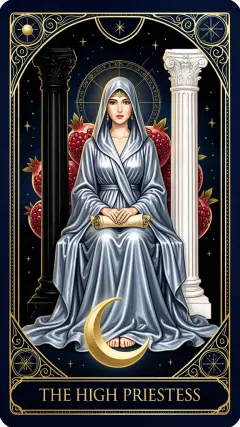
- Hidden influences: The High Priestess, intuition and knowledge you don’t yet put into words.
- Obstacles: Five of Pentacles, a feeling that strength and support are lacking.
- Surroundings: Three of Pentacles, teamwork, a chance to find a mentor.
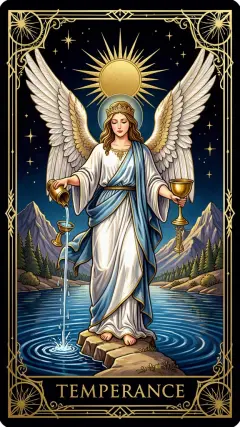
- What is worth doing: Temperance, measure out the load and move without rushing.
- Likely development: Eight of Pentacles, mastery that grows out of practice.
Putting it together: you are leaving what is familiar and juggling duties, and the feeling that you lack strength adds to the anxiety. There are people nearby who make learning easier, and Temperance advises an even pace. Then the development leads to growing mastery: a direction, not a guarantee.
The example is made up: it shows how the positions are read, not what will “come up” for you.
How to read the spread
- Read the Horseshoe as a story, from left to right: each card continues the previous one.
- Cards 3 and 4 (hidden influences and obstacles) often explain each other: see whether they are about the same thing.
- Turn the “What is worth doing” card into one concrete action for this week.
- Compare the last card with the first: what would change if you took the advice into account.
Who lays out the cards in the bot
In the bot, the spread is laid out by Iris, an artificial intelligence rather than a human tarot reader. We don’t hide it. She interprets exactly the cards that came up, in light of your question and the positions of this spread. It is entertainment and a reason to reflect, not a forecast or advice on health, money or legal matters.
See also
Frequently asked questions
How many cards are in the Horseshoe spread?
Seven: two about the past and present, two about the hidden and the obstacles, one about the surroundings, one about action and the last about development.
How is the Horseshoe different from the Celtic Cross?
The Cross has ten cards and more layers, including the subconscious and “hopes and fears.” The Horseshoe is simpler: it gives a story and a concrete hint without excessive depth.
Can I use it for a yes-or-no decision?
A separate spread is better for a yes-or-no answer. The Horseshoe helps you understand a situation and choose an action.
Will the “Surroundings” card show what others think?
No. It describes the circumstances and the roles of people in the situation; other people’s thoughts and intentions are not revealed by the cards.
How much does it cost?
120 crystals, and your first full spread in the bot is free. One crystal equals one Telegram Star.
Who lays out the cards?
Iris, an AI tarot reader. She ties the seven cards into one whole story for your question.