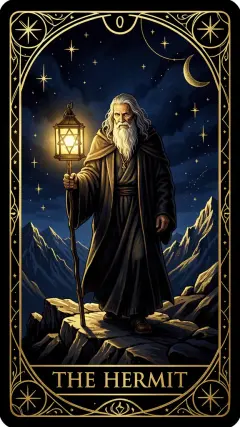
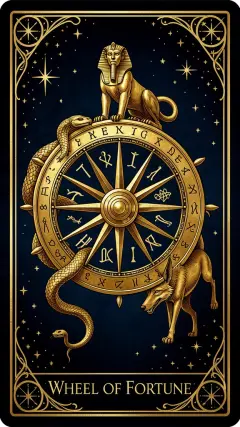
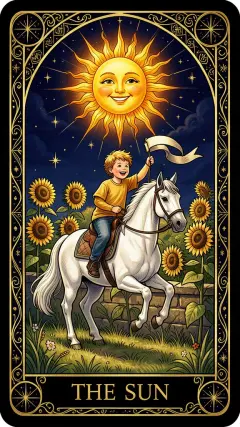
Past
What influenced the situation and led to it.
A question to ask yourself:
Everything about this card →Free · no sign-up
Three cards: what was, what is now and where things may be heading. A classic spread about the future, no sign-up.
Your question:
Past
What influenced the situation and led to it.
A question to ask yourself:
Everything about this card →Present
What is important to notice right now.
A question to ask yourself:
Everything about this card →Future
The direction things are moving if nothing changes. Not a verdict.
The card’s advice:
Everything about this card →Here the future shows a direction, not a verdict: the decisions you make change it.
One topic, one spread: if you keep laying out cards again and again, they just become random.
It is the best-known three-card spread: the first card speaks about the past, the second about the present, the third about where things may be heading. People love it for its simplicity: three images add up to a short story that is easy to read even without experience.
Tarot doesn’t know the future and doesn’t promise events. The third card is a tendency and a hint about what to pay attention to, not a forecast. What actually happens depends on your decisions, on the people around you and on chance. That’s why a spread about the future works best as a way to put your thoughts in order.
Projects, work, study, a move, your own habits and changes in life. If your question is about a relationship, love tarot is a better fit: there the cards look at your side. Don’t ask the cards about health, legal matters or large sums of money.
Cards are picked at random in your browser, the meanings are written for this site, and nothing is sent to a server. This is entertainment and a prompt for reflection, not a forecast.
No, tarot doesn’t know the future. The third card shows a tendency and suggests what to pay attention to. What really happens depends on your decisions and circumstances.
Read it from left to right as a story: what was, what is now, where things are heading. See which themes repeat, and write down one action you can take yourself.
Projects, work, study, a move, habits, how you are feeling. It’s best not to ask the cards about other people’s thoughts, health, legal matters or large sums of money.
It’s better not to: every spread is random, and if you keep laying out cards until you like the result, you’re just looking for a convenient answer. A new topic or a new situation is a good reason for a new spread.
There, Iris, an artificial intelligence, lays out the spread for your own question, explains each card and shows how they connect. Here you get short card meanings without personalization.
Yes, on the site with no sign-up. In Telegram your first full spread is free too; after that there are paid spreads, and you can see the price before you pay.